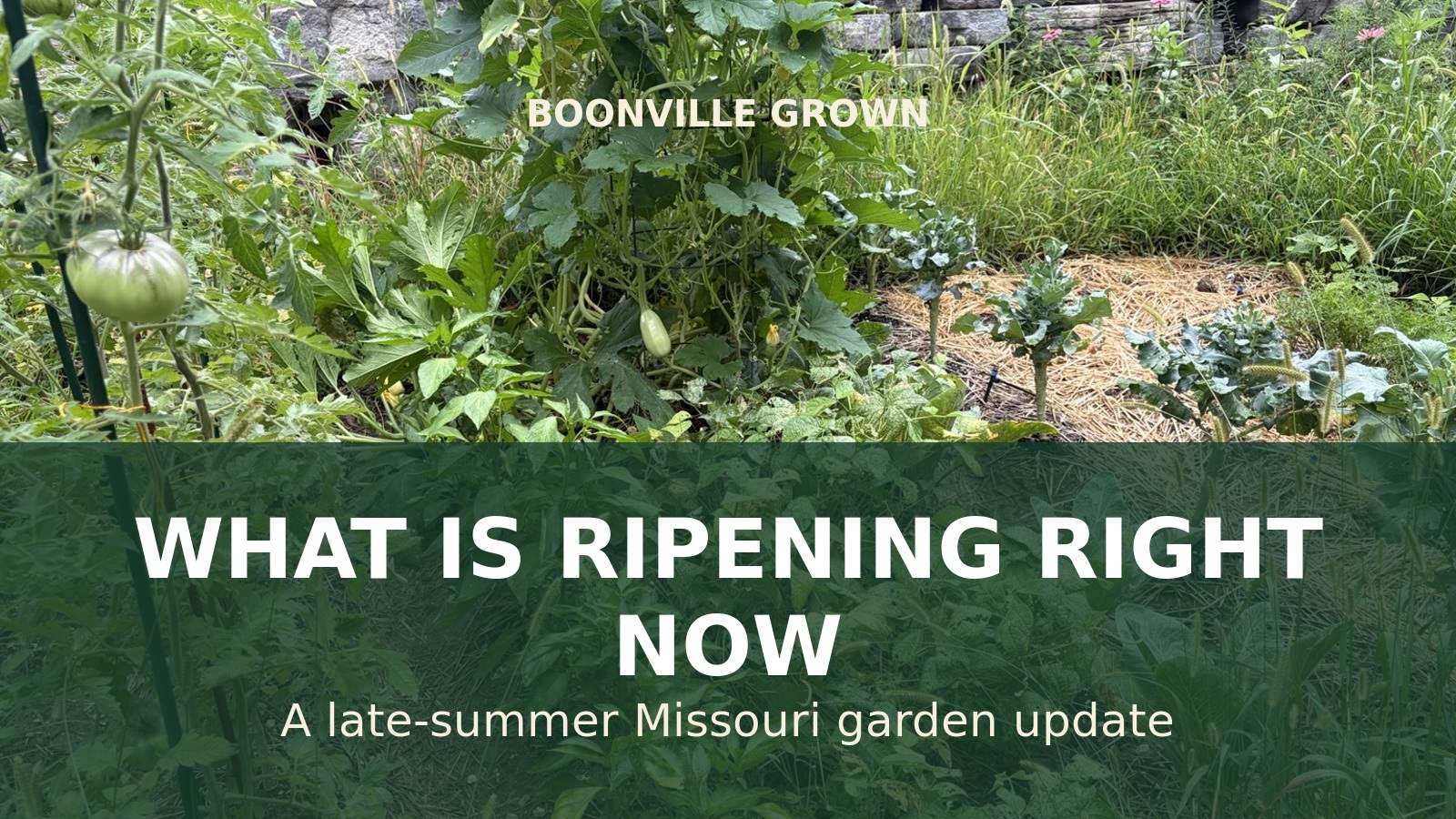
Late August at Boonville Grown is not an ending. It is the point where two seasons overlap.
The summer plants are still flowering, setting fruit and filling the harvest basket, while the first fall crops are settling into freshly prepared rows. Our August 19 harvest included a generous collection of volunteer cherry tomatoes, green beans, okra and cucumber—a colorful snapshot of a late-summer Missouri garden harvest that is still gaining momentum.
Tomatoes are still building
The volunteer cherry tomatoes supplied the largest share of today’s harvest. They are ripening in several shades, from warm orange to deep red, and continue to provide a steady stream of small fruit.
The main tomato plants are moving at a slower pace, but they are carrying several large green clusters. New flowers remain visible alongside the developing fruit. That means the plants are still attempting to extend the season, even as the days gradually shorten.
The pepper flush is taking shape
The baby bell and banana pepper plants continue to flower and set fruit beneath aggressive top growth. Several peppers are already visible, with more developing behind them. If those flowers hold, this could become one of the strongest pepper flushes of our season.
The lesson here has been patience. Peppers may appear quiet for long stretches and then begin producing heavily once the plants have developed enough structure to support the crop.
Beans continue another round
Both the older and newer green-bean plantings are flowering and forming pods. The older plants show visible accumulated leaf damage, but they continue to produce. The newer planting is beginning its own cycle of flowers and young pods.
This is one of the clearest benefits of succession planting: the first planting can continue producing while the second planting prepares to take over. The garden does not have to depend on one short harvest window.
Cucumbers, squash and zucchini are still setting fruit
Fresh growth and yellow flowers remain visible throughout the cucurbit vines. Cucumbers are developing along the support, and both squash and zucchini have several young fruits at different stages.
Not every young fruit will mature. Pollination, heat and plant stress can still cause an apparent fruit to abort. For now, the strongest fruits remain firm and continue to enlarge, so daily observation is more useful than judging them from a single morning.
Okra thrives in late-summer heat
Okra continues to look at home in August. Open flowers, developing pods and harvest-ready pods may appear on the same plant at once. Because okra can become tough quickly, checking the plants frequently is essential during active production.
The pods in today’s basket were a small part of the total harvest, but they are a reliable reminder that warm-season crops can still contribute meaningfully late in the season.
The fall garden has begun
While the summer crops continue producing, the fall transition is already underway. Broccoli seedlings have been transplanted into the former potato row. Lettuce and spinach have been direct-sown in a separate prepared bed, with a light straw covering protecting the seed zone.
The fall planting is still vulnerable. One broccoli seedling was lost shortly after transplanting, but the remaining seedlings were standing perky and upright. The next priorities are steady moisture, protection from animal browsing and close observation for chewing insects.
One garden, two seasons
The most interesting part of the August garden is not one particular crop. It is the overlap: cherry tomatoes ripening beside newly transplanted broccoli, okra pods growing while lettuce and spinach wait beneath straw, and older bean plants producing alongside their successors.
This is the garden story we want to keep documenting honestly—what worked, what struggled, what surprised us and what we will change next year.
What is still producing in your garden? Share your strongest late-summer crop in the comments.
Reader field notes
Checking the garden gate…